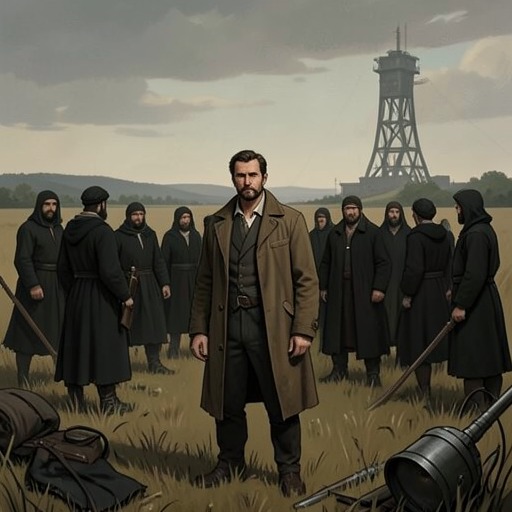
Wolfram Bossert
The Disappearance of Josef MengeleWolfram Bossert, known as Musikus, is a former Wehrmacht corporal who becomes a friend, confidant, and practical protector of Josef Mengele in Brazil. His importance lies in the intimacy of his assistance: he draws Mengele out of isolation, gives him a place among his own family, and cares for him through serious illness. That loyalty helps preserve a fugitive life built on concealment, and after Mengele’s death Bossert becomes a crucial witness to the identity hidden beneath the name Wolfgang Gerhard.
Background and Introduction
Bossert is an Austrian whom Gerhard meets at a German club in São Paulo. Like other former Reich servicemen, he came to Brazil after Germany’s defeat, settling in Eldorado. He works as maintenance manager at a paper works, a modest occupation compared with Mengele’s former standing, but brings other qualities into their friendship: he loves classical music, cultivates intellectual and artistic interests, and enjoys sharing them. The nickname Musikus captures the cultural persona that distinguishes him from the otherwise isolated Mengele.
Gerhard repeatedly urges Mengele to meet Bossert. The first introduction takes place at the Stammers’ home in Caieiras, where Bossert arrives neatly dressed, bringing pastries and an open, engaging manner. Mengele agrees only on condition that his identity remain concealed. He presents himself as Hochbichler, and Bossert initially accepts the encounter with the Swiss farmer whose merits Gerhard has praised. In conversation, however, the visitor’s Bavarian accent and his knowledge of history and biology lead Bossert to suspect that Hochbichler is more than an ordinary farm manager.
Friendship and the Secret Identity
Mengele tests the new acquaintance before trusting him. Bossert’s political beliefs help settle the question: he is a Nazi fanatic whose racist, antisemitic, and reactionary convictions align with Mengele’s. At their meetings, he praises Hitler and voices nostalgia for Germany at its peak. Bossert’s admiration is not merely a cover for practical help; it makes him a willing audience for Mengele’s ideological self-justification. When Mengele rails against perceived threats to racial purity and German identity, Bossert listens approvingly and hesitates before taking notes on the words of the man he flatters as a scholar.
Gerhard argues that Mengele has little to fear from Bossert. He has met Bossert’s wife, Liselotte, and knows their two children, Sabine and Andreas; he has also discussed revealing Mengele’s identity with Hans Sedlmeier, who assents after meeting Bossert. Mengele finally unmasks himself, but only after Bossert swears, before Gerhard, to keep the secret. The oath makes the relationship’s stakes explicit: Bossert is no longer merely a sympathetic acquaintance but a trusted custodian of information that could expose a wanted war criminal.
A Household Outside the Stammers’ Farm
Bossert’s friendship gives Mengele a recurring escape from life at the Stammers’ home. On Wednesday evenings, he dresses carefully, hides a revolver in his raincoat, and goes to dinner at the Bosserts’ suburban São Paulo bungalow. At first Gerhard accompanies him because Mengele fears an ambush; later Bossert collects him himself, arriving at seven in the evening. The household’s family portraits, Alpine objects, and Gmunden pottery create a familiar German-speaking domestic world. Bossert’s wife and children welcome Mengele as Uncle Peter, and he plays Monopoly with Sabine and Andreas and shares the family meal before the two men listen to classical music.
The welcome offers temporary relief, not release from fear. On the drive back to Caieiras, Bossert observes how sharply Mengele changes: the animated guest falls silent, hides his face when a car stops beside them, and reacts with alarm to the sight of a policeman. Bossert nevertheless encourages him to leave his self-imposed confinement. He takes Mengele on a weekend trip and photographs him—the first time Mengele has allowed anyone to do so since the late 1950s. With Bossert and Gerhard’s protection, Mengele begins making brief excursions, sometimes without his usual hat and raincoat. Bossert’s children accompany him on bus trips to a supermarket and the cinema. These small outings suggest a cautious rehabilitation, though the account makes clear that Mengele remains afraid of recognition.
Bossert also supports the practical arrangements that let Mengele imagine a less restricted old age. Mengele’s family helps him purchase a studio in São Paulo for rental income, but the title is placed in the name of Miklos Stammer. When Gerhard announces that he must leave Brazil, Bossert is designated to take over everyday assistance: forwarding mail, shopping, and acting as an intermediary between Günzburg and the Stammers. Gerhard gives Mengele his identity card, which could help with bureaucratic matters after the photograph is replaced. Bossert is expected to help laminate it, extending the circle of people involved in maintaining Mengele’s assumed identity.
Care, Decline, and Death
Bossert’s role changes from companion to caregiver when Mengele develops a severe abdominal illness. He buys herbal remedies and medicines, but Mengele’s condition worsens, and Bossert eventually drives him to a hospital in São Paulo. There the discrepancy between the patient’s apparent age and the date of birth on his papers risks exposing the false identity: the document gives 1925, not Mengele’s real birth year of 1911. Bossert explains the discrepancy as an administrative mistake and says he will have it corrected. His quick response protects the disguise at a moment when medical care has made concealment harder, even as he gets Mengele to the specialist he needs.
Bossert remains present after Mengele suffers a stroke in 1976. He and Glawe take turns at the hospital bedside. When Mengele returns home, he is not fit to live alone, and Norberto moves in to care for him; the arrangement soon fails, and the Glawe family breaks off contact. Bossert’s continued role belongs to a wider pattern of intermittent caretaking: the fugitive depends on others for daily support even as suspicion and anxiety make ordinary companionship difficult.
On 7 February 1979, Bossert is with Mengele at a holiday home by the Brazilian coast. During their walk along the shore, Mengele speaks about his parents, Günzburg, and a wish to return home. He then enters the water alone and drowns. Bossert struggles through the waves to bring him back to shore, but Mengele is dead. The following day, Mengele is buried in Embu das Artes under the false name Wolfgang Gerhard. Bossert, then in hospital himself, misses the funeral. The concealment continues beyond the death it was designed to protect.
Exposure and Narrative Significance
Years later, a search of Bossert’s home helps turn a long-suspected death into a traceable account. In June 1985, police find recent photographs of the moustachioed man and other objects linking the household to Mengele. Bossert tells them that Mengele is dead and buried in a vault at Embu cemetery under the name Wolfgang Gerhard. His disclosure gives investigators a specific grave and identity to pursue. Gitta Stammer, questioned separately, recognizes the photograph as Peter Hochbichler, the Swiss farm manager introduced to her by Gerhard, while denying that she knows Josef Mengele.
Bossert’s arc is defined by the closeness between care and complicity. He offers meals, excursions, a family setting, medical assistance, and practical help with false papers; each act makes Mengele’s life less solitary while helping him remain beyond the reach of justice. His final disclosure does not undo those years of protection, but it changes their consequence: the friend who helped preserve the secret becomes one of the people whose information leads to the grave and the public examination of the identity beneath it.